Centering the Dignity of Work at the 114th International Labour Conference
ICMC delegation brings message of Magnifica Humanitas to the ILC, strengthens partnerships and cooperation amongst Catholic-inspired organizations
Read ICMC’s statement to the 114th ILC, delivered by ICMC President Christine Nathan on Tuesday 9 June
On 1-12 June 2026, an ICMC delegation joins government, employer, worker, and non-state delegates from the 187 Member States of the International Labour Organization (ILO), at the 114th session of the International Labour Conference (ILC).*
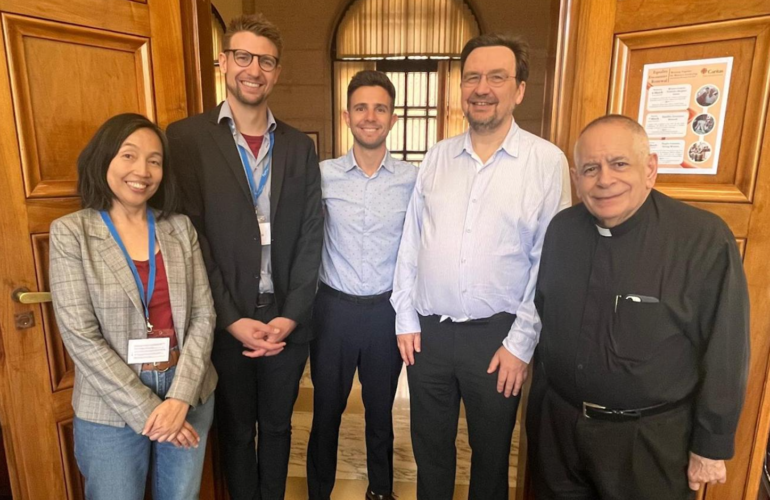
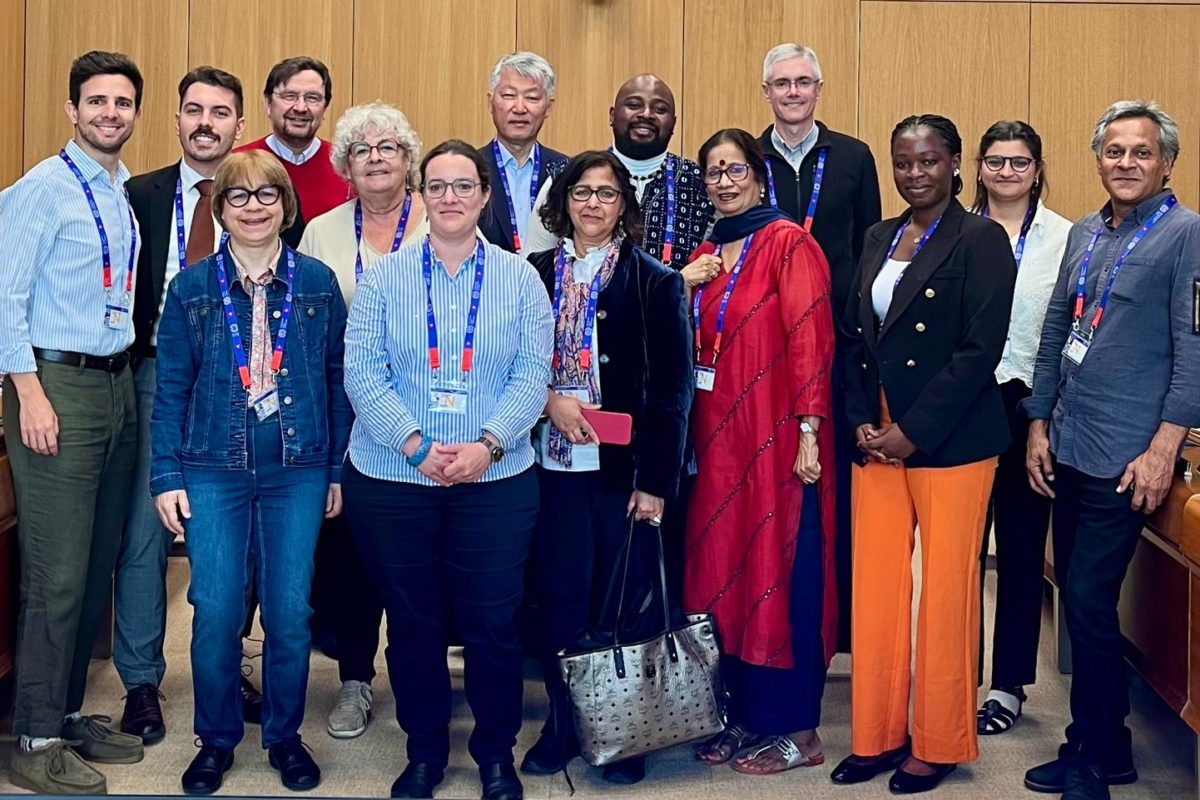
ICMC’s delegation comprises ICMC President Miss Christine Nathan, who will deliver a plenary statement to the ILC on Tuesday 9 June, alongside “The Future of Work – Labour after Laudato si’” (FOWLS) Project Manager Mr. Ignacio Alonso Alasino, and Policy and Communications Officer Ms Oumou Diallo.
‘A moment of choice’: Work, AI & digitalization at the International Labour Conference
In his report to the ILC, ILO Director-General Gilbert F. Houngbo identifies a global ‘moment of choice’, in which artificial intelligence (AI) and digitalization are reshaping the world of work. “Whether such change translates into shared prosperity or widening inequalities depends on how innovation is governed,” his report reads. “AI can complement human work, support skills development and enhance productivity. But it can also intensify work, displace tasks and shift risks to the most vulnerable.”
‘Migrants are overrepresented in platform and app-based workforces, especially in delivery, domestic and care services, compounding their legal, social, and economic vulnerability’.
Ignacio Alonso Alasino, FOWLS Project Manager at ICMC
From the perspective of the FOWLS Project network, the advent of AI and digitalization has particularly impacted more vulnerable workers around the world, including migrants.
“Migrants are overrepresented in platform and app-based workforces, especially in delivery, domestic and care services, compounding their legal, social, and economic vulnerability,” explains FOWLS Project Manager Ignacio Alonso Alasino. “Platformization also intersects with the care economy, where work is feminized, undervalued, and mediated by digital platforms, without adequate protections for workers.”
The ILC agenda accordingly includes a discussion on decent work in the platform economy, opening the possibility of a new ILO Convention or other legal framework providing a global reference point for employment rights and protections.
“This agenda item represents a decisive step toward clarifying workers’ rights in a rapidly expanding sector, currently governed by legal ambiguity and regulatory fragmentation,” says Alonso Alasino. “Platform work exemplifies a core concern of the FOWLS Project: that work reorganized through technology without adequate social dialogue shifts risks to workers, while concentrating power and data in corporate platforms. For us, this agenda item is not only technical but also deeply moral, as it touches directly on the dignity of work, social protection, and responsibility in the digital economy.”
Magnifica Humanitas: Centering the dignity of workers in the digital age
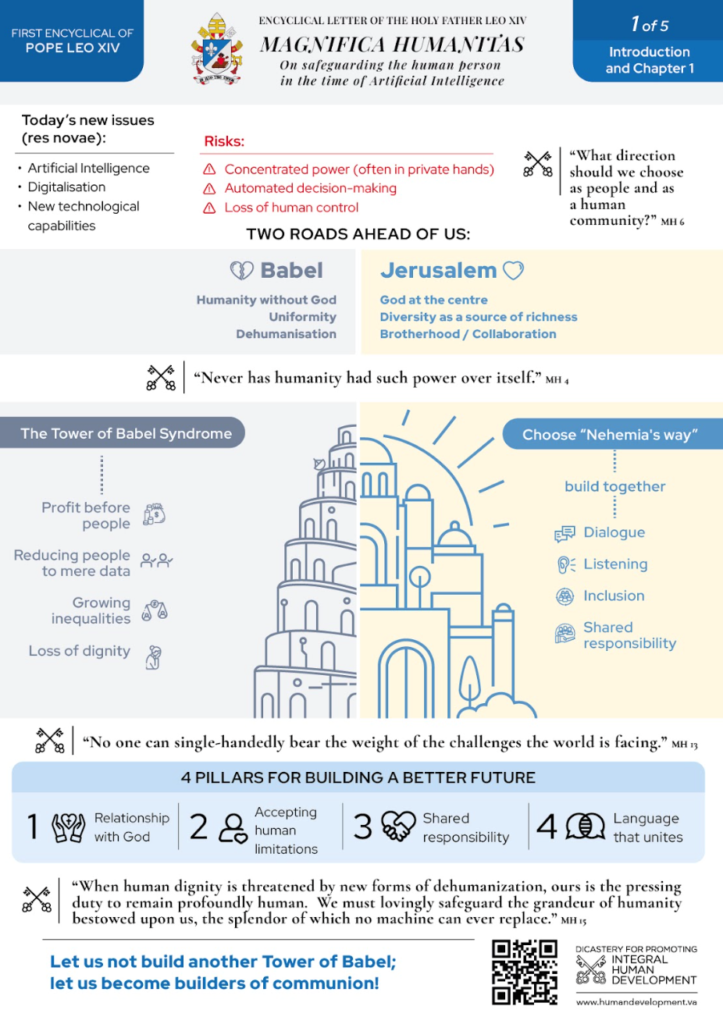
Discussions and decision-making at the114th ILC take place against the backdrop of Magnifica Humanitas, Pope Leo XIV’s first encyclical on safeguarding the human person in the time of artificial intelligence. Pope Leo urges that work is not “evaluated solely in terms of efficiency, but in relation to the dignity of the worker, the right to sufficient remuneration and the genuine possibility of participating in society.”
‘As Catholic-inspired organizations, we bring the distinctive added value of our long-term accompaniment of workers, migrants, and communities at the margins of formal employment systems’
Ignacio Alonso Alasino, FOWLS Project Manager at ICMC
For Alonso Alasino, the participation of Catholic-inspired organizations at the ILC is strengthened by the framework provided by Magnifica Humanitas, alongside Pope Francis’ 2015 encyclical Laudato Si’, On Care for Our Current Home that inspired the creation of the FOWLS Project.
“The current global moment really reinforces the insight of Laudato Si’, which is that technological progress – when divorced from social justice – risks deepening exclusion rather than serving human dignity,” he says. “As Catholic-inspired organizations, we bring this message to the ILC, as well as the distinctive added value of our long-term accompaniment of workers, migrants, and communities at the margins of formal employment systems.”
Coordination and cooperation amongst Catholic-inspired organizations at the ILC is crucial to maximizing this contribution, and to bringing about long-term strategic change.
“Coordination via the FOWLS Project enables us to communicate a shared narrative rooted in human dignity, care, and just transitions, and to bridge policy, ethical reflection, and lived experience,” says Alonso Alasino. “We have the possibility of an ILO Convention on platform work, which would mark an historic opportunity to realign technological change with social justice. This is an outcome in which civil society and tripartite actors, including Catholic-inspired organizations, can play a meaningful and constructive role.”
***
* Established in late 1919, the ILO is one of the oldest UN agencies. It is uniquely the UN’s only tripartite agency, bringing together governments, employers, and workers to set labor standards and develop policy programs to promote decent work around the world. The ILC, which takes place each year in Geneva, sets ILO policy, its work program, and budget, and elects its Governing Body.