Sanctuary Through the Ages: The Church’s 75-Year Legacy of Refugee Protection
For centuries, the Church has stood with the displaced and the vulnerable. We trace that enduring legacy, from its theological roots to the founding of ICMC in 1951 and the work being carried out on the ground today.
Key Takeaways
- The Church’s commitment to refugees is rooted in Catholic Social Teaching.
- The International Catholic Migration Commission (ICMC) was founded in 1951 and has since served millions of displaced people across every major humanitarian crisis.
- Today, ICMC takes action around the world, deploying expert staff and partnering with the local Church to deliver protection, and supporting resettlement.
In 2026, with global displacement at record levels, ICMC’s mission is more urgent than ever.
Theological Foundation: The Church’s Call to Serve
The Church’s care for the displaced is rooted in faith rather than policy.
Scripture is the starting point. In Matthew 25, Christ identifies himself with the stranger: “I was a stranger and you welcomed me.” The Holy Family’s flight into Egypt is understood in Catholic tradition as the archetype of every refugee family, across every age and every border.
That conviction has never weakened. Pope Leo XIV has stated plainly, “Christ, who identifies with the stranger, touches the wounds of humanity and calls us to recognize him in every brother and sister who needs to be welcomed, protected, supported, and integrated. Let us lift our gaze to him, without turning away from those who suffer; let us look to the Lord to learn to see our brothers and sisters through his eyes.”
This is the theological ground on which the history of asylum stands.
A Founding Moment: 1951 and the Creation of ICMC
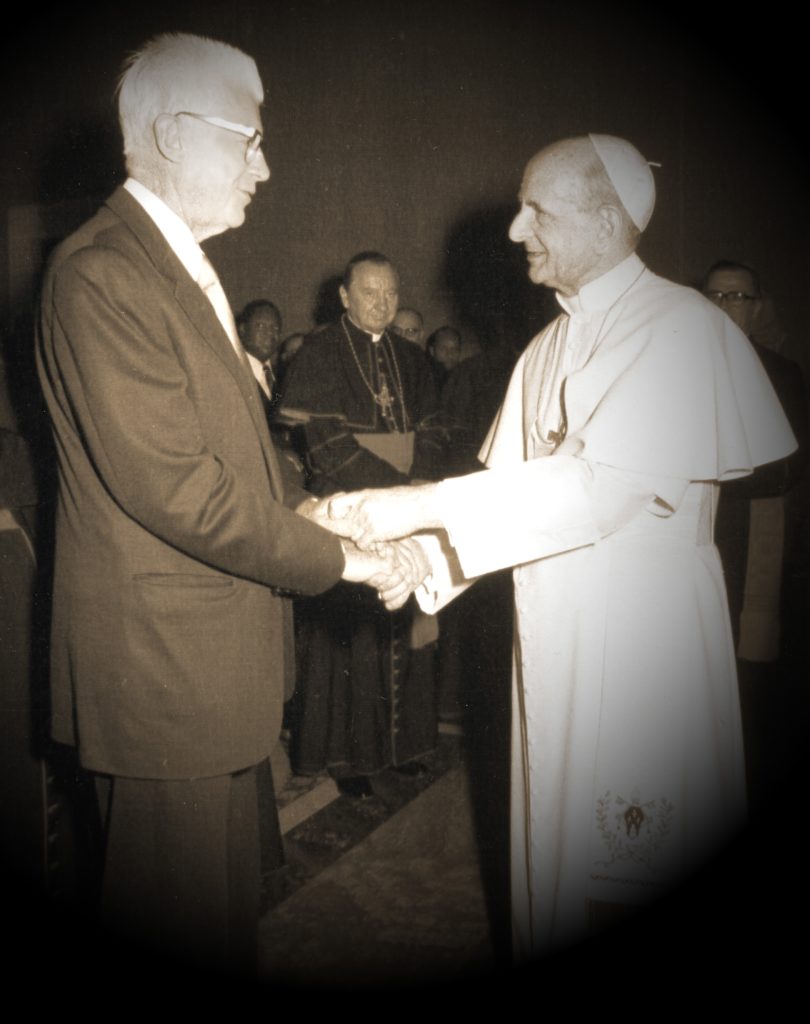
The aftermath of World War II left Europe shattered, with millions of people displaced and without homes. Catholic organizations were already on the ground providing relief, but the response was fragmented.
Pope Pius XII, Monsignor Giovanni Battista Montini (the future Pope Paul VI), and American layman James J. Norris recognized that a more coordinated structure was needed. In 1951, the International Catholic Migration Commission was born, with a Vatican-endorsed mission to unite and organize existing Catholic associations and committees, and to promote, reinforce, and coordinate their activities on behalf of migrants and refugees.
In 1952, Pope Pius XII issued Exsul Familia Nazarethana, a landmark document that articulated the Church’s understanding of migration, affirmed the dignity and rights of migrants and refugees, and announced the establishment of ICMC. That same period also saw the adoption of the 1951 Refugee Convention, which established the international legal framework for refugee protection.
Decades of Service: ICMC’s Work Across Major Crises
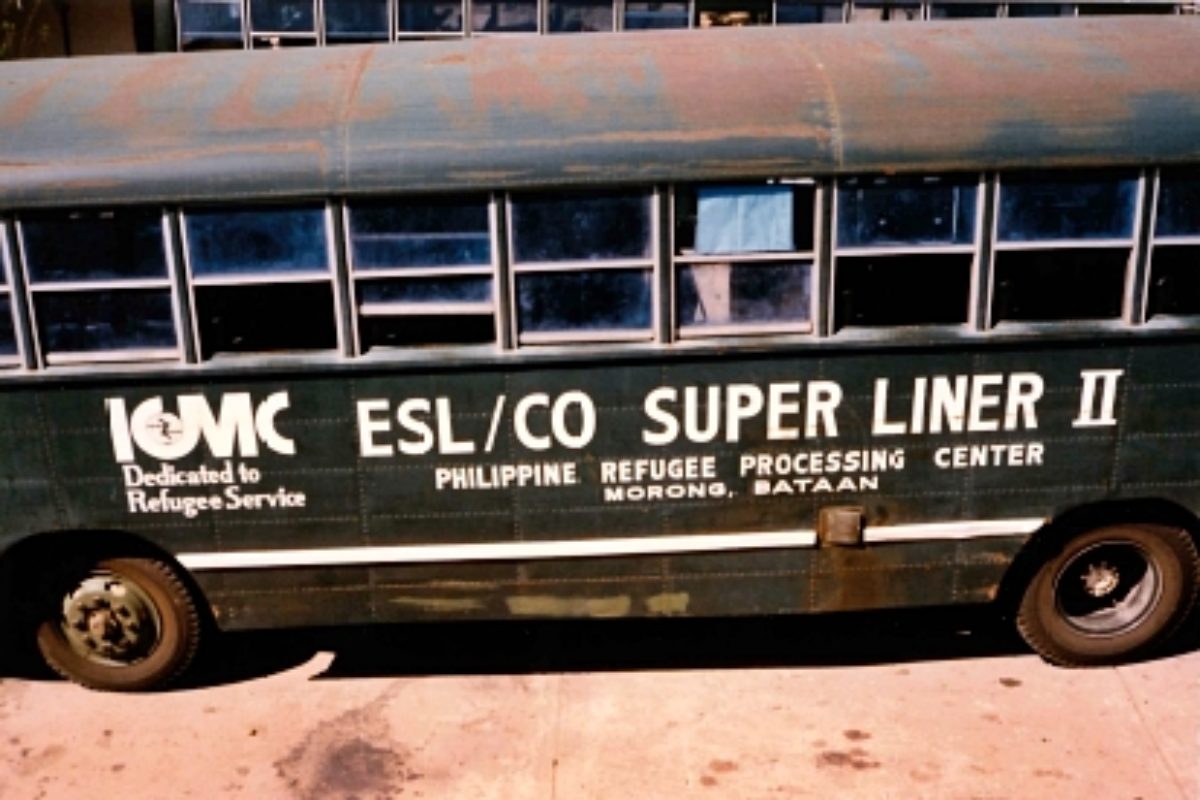
From its founding, ICMC moved quickly into action. The scale and reach of its work over seven decades reflect the breadth of what Catholic refugee services look like in practice.
- 1979: Following the Vietnamese refugee crisis, ICMC leads the Orderly Departure Program, resettling more than 500,000 people over nearly two decades, primarily to the United States.
- Early 1980s: ICMC expands resettlement operations in Turkey and the Middle East, in partnership with the U.S. Department of State, as refugee flows from the region intensify.
- 1990s: ICMC plays a significant role in the Balkans conflict, processing thousands of resettlement applications from displaced Bosnians, and opening microcredit institutions in Serbia-Montenegro and Kosovo to support uprooted people seeking to rebuild their lives.
- 2001: ICMC launches its largest-ever field operation in Afghanistan, sheltering over 70,000 returnees following the fall of the Taliban regime.
- 2004: When the Indian Ocean tsunami strikes Indonesia, ICMC is already present in Aceh and responds immediately to the devastation.
- 2011: As the Syrian civil war triggers mass displacement across the Middle East, ICMC activates operations in the Greater Damascus area and expands support to Iraqi refugees in Syria, displaced people fleeing into Jordan, and vulnerable host communities.
- 2022: ICMC becomes a founding partner of the CR4U initiative, coordinating Church responses to the displacement crisis caused by Russia’s invasion of Ukraine.
- 2026: Informed by learning from CR4U, ICMC forms part of the new Catholic Response for Emergencies (CR4E) initiative, a global platform for collaboration and coordination amongst leading Catholic-inspired humanitarian organizations.
These milestones show how ICMC has continually adapted its work across regions and crises, translating the Church’s commitment to the displaced into sustained, on-the-ground action.
What ICMC Does: The Full Spectrum of Support
ICMC functions as a global network, supporting and coordinating efforts of member national Catholic Bishops’ Conferences, supporting resettlement, and deploying specialists where they’re needed most.
The Catholic migration services it coordinates today span a wide range of activities:
- Expert deployment: In 2025, ICMC deployed specialists to UNHCR operations in 24 countries and to UNICEF operations in five more, conducting nearly 25,000 individual assessments for resettlement and refugee status.
- Supporting the local Church: ICMC supports its member national Bishops’ Conferences and Catholic partners to implement projects and actions for refugees and migrants in communities around the world.
- Resettlement support: ICMC supports European resettlement efforts via the EUAA Resettlement Support Facility (EUAA RSF) in Istanbul.
- Policy advocacy: ICMC engages directly with the European Union, United Nations, and governments, and coordinates networks of global civil society and Church and Catholic-inspired organizations to keep human dignity at the forefront of migration, asylum, and labor policy and governance.
- Capacity building: Through programs like the SHARE Network, ICMC builds the capacity of local communities and Church bodies in Europe to welcome and integrate newcomers effectively, and raises local voices in European advocacy for better migration policies.
Migrant assistance of this kind requires not only resources but deep local knowledge. ICMC draws on its member national Bishops’ Conferences to ensure responses are rooted in the communities they serve.
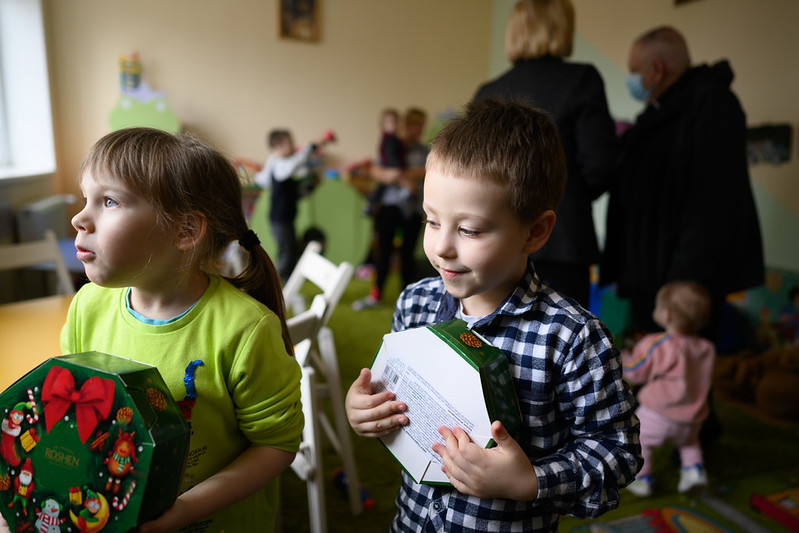
75 Years On: The Mission in a World of Record Displacement
The scale of displacement today is without modern precedent. Tens of millions of people are living as refugees or internally displaced persons, from Ukraine to the Democratic Republic of Congo to Gaza.
The Church leads in moments like these because its mission does not shift with the political winds. For 75 years, ICMC has translated the Gospel command to welcome the stranger into tangible, life-changing support, advocacy, and action. Join the work. Stand with the displaced this anniversary year.