‘Refugees and migrants are amongst the most hopeful people you can find’
ICMC interviews Monsignor Robert J. Vitillo, former Secretary General, on the occasion of his recognition as a ‘Guardian of Life’ by the Vatican’s Pontifical Academy for Life
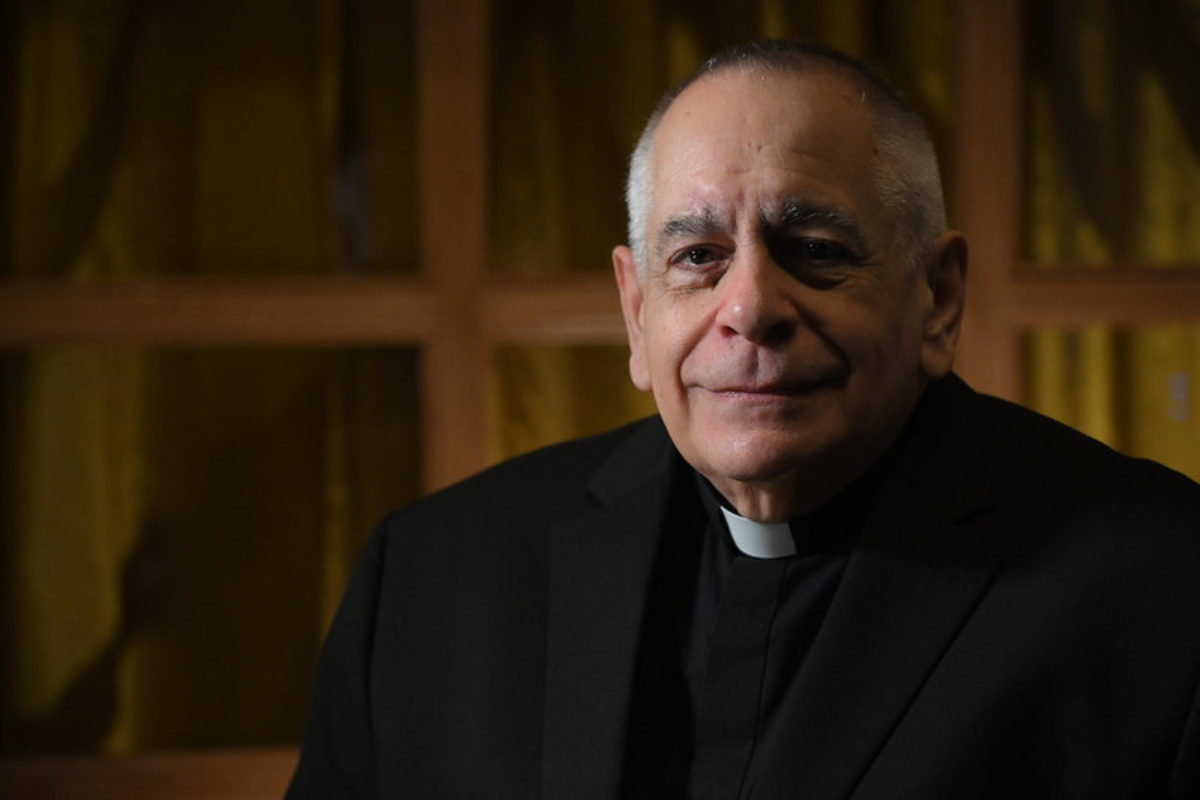
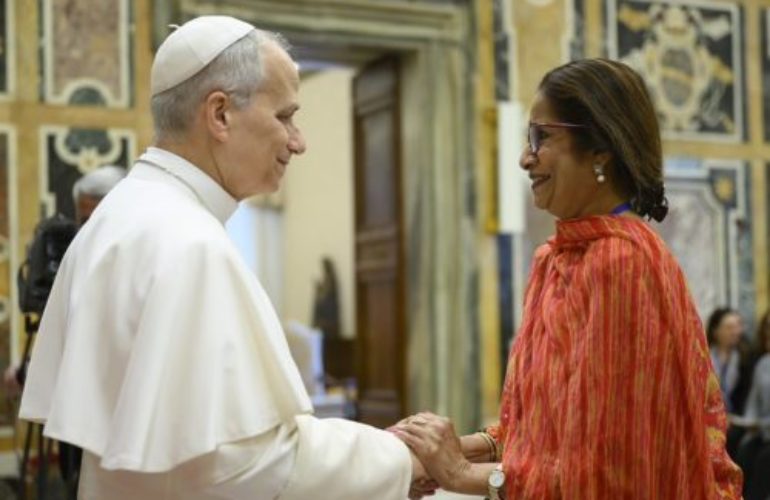
Monsignor Robert J. Vitillo served as ICMC Secretary General from 2016-24, having worked extensively on health, mental health, refugee, and migration issues around the world. He is now Senior Advisor to the Vatican’s Dicastery for Promoting Integral Human Development, and serves on the Board of Directors of ICMC, Inc.-USA.
In February 2026, the Pontifical Academy for Life (PAV)recognized his work to promote human dignity, social inclusion, and the right to healthcare via the Guardian of Life Award 2026. We sat down with Msgr. Vitillo in Rome to discuss the prize, his reflections on ICMC at 75, and the importance of hope when looking to the future.
***
ICMC: Good afternoon, Monsignor, and many thanks for being with us today. Many congratulations also on your recent Guardian of Life award, and the recognition of your work by the Pontifical Academy for Life. Can you tell us a bit more about the award and your nomination?
MV: My pleasure! I first heard the Pontifical Academy for Life (PAV) wanted to honor me with the prize last summer, in a letter from the President Monsignor Renzo Pegoraro. The membership of the PAV is mainly made up of scientists and academicians, and the prize – as I understand it – is a way for the PAV to honor the work outside the “academy” by promoting and providing health and socio-pastoral services directly to the people.
ICMC: Can you tell us something more about your specific work that the prize recognizes?
MV: Sure.Monsignor Pegoraro’s letter referenced the work I’d done on migration and also on health, especially on the formulation of anti-retroviral (ARV) and anti-tuberculosis (anti-TB) medicines for children.
I talked in some detail about this work in a recent interview with Caritas Internationalis, but, broadly, we began in the late 1980s, working alongside the Pontifical Council for Justice and Peace to respond to the need to develop ARV and anti-TB medicines for children. We appealed to major pharmaceutical manufacturers to do the research that was needed, then engaged diagnostics manufacturers so we had the right kind of tests to diagnose children early, and finally the regulatory authorities in charge of rolling out research on medicines.
In fact, we didn’t have the anti-retroviral medicines until the 1990s and, when we did, they were proven to be effective both in lowering rates of AIDS-related illnesses and preventing virus transmission. In the first instance, though, the new medicines and tests were extremely expensive, so our work then became focused on advocacy for improved access.
Caritas and other faith-inspired organizations were very active in promoting the establishment of the Global Fund, at a time when the U.S. government established the U.S. President’s Emergency Plan for AIDS Relief (PEPFAR) and other governments were directly funding middle and lower-income countries to buy the medicines. We were able to demonstrate the need and the market, so that manufacturers also reduced prices for both the new medicines for children and the corresponding versions for adults.
ICMC: Why was it so important for the Church to respond to the issue of HIV and AIDS in this way? What specific role and contributions does the Church bring?
MV: At a fundamental level, the Catholic Church always responds to people with needs, no matter their background or status. When HIV was first identified in the 1980s , Catholic healthcare facilities and social care and assistance agencies, such as Caritas, were assisting many people living and dying with HIV and AIDS, all around the world. In some African countries, this group constituted more than half of the people being served by faith-based organizations, with a large proportion of this assistance being provided by the Catholic Church.
At international level, our cooperation with the World Health Organization and later with UN AIDS enabled us to learn the science, bring the Church’s voice to global discussions on prevention and access to care, and get some funding to smaller Church-based organizations around the world to start and expand their programs. I think it was crucial that we were at the vanguard of new scientific knowledge, while also helping people understand why the Church teaches that a lifelong marriage is the way people should be having intimate relationships.
I must say that when I was in the Philippines camp communicating with the ICMC office in Manila every day by radio, I could never have imagined being approached later to be the Secretary General of ICMC!
Msgr. Robert J. Vitillo
ICMC: Subsequent to your work with Caritas, you of course served as ICMC’s Secretary General from 2016 to 2024. How did you come to work on these core issues of health and migration?
MV: I always say these things happen with God’s sense of humor! I first thought I wanted to be a medical doctor, but I was very much attracted to theology and knew that I wanted to be a priest. So I decided that I should specialize in the theological studies first, and then hopefully I could study medicine.
As it turned out, when I was studying for diocesan priestly ministry, I was assigned to Catholic Charities agency in our diocese. I very much liked what I was doing, and they requested the local bishop to assign me to full-time ministry at Catholic Charities, but I first needed to study social work. It really turned out to be the best area of study and practice for me, because it’s really about the integral, whole person, and the need to look at the person and society together.
I was already aware of ICMC almost from the beginning of my diocesan service at Catholic Charities, through doing refugee resettlement work. It was ICMC that would call us to say we needed to be at the airport because a refugee was arriving, and provided the case and biographical information that we needed to support them. So I knew that this was a very important worldwide agency, doing crucial work in refugee resettlement and other kinds of migration issues.
I’d also served at a resettlement processing camp managed by ICMC in the Philippines, where I was asked to help with designing the cultural orientation program because of my direct experience working with people who had been resettled to our diocese. That was a very good experience that made me identify with this work. I must say that when I was in the Philippines camp communicating with the ICMC office in Manila every day by radio, I could never have imagined being approached later to be the Secretary General of ICMC!
ICMC: We’re talking now in ICMC’s 75th anniversary year. How do you look back on the history of the organization and our work during this period, and how do you see ICMC’s mission in the future?
MV: I was already very conscious of the roots of ICMC even before I joined the organization, and especially after I became Secretary General.
The impetus to establish ICMC began with a layman, James J. Norris, who had been working with Catholic Relief Services in the post-war period, when many people in Europe who still needed a permanent home. He was in close contact with Pope Pius XII because they were both involved in this emergency work, and with Monsignor Giovanni Battista Montini, an important officer of the Secretary of State who later became Pope Paul VI.
Today, more than 70% of refugees and migrants are being served in lower income countries, and most are being assisted by the Catholic Church, other faith-based organizations, civil society organizations, and governments in lower and middle-income countries. That’s why ICMC continues to partner with local churches to help strengthen their responses.
Msgr. Robert J. Vitillo
James J. Norris encouraged these Church officials to start a separate agency to resettle refugees and serve those refugees and migrants who wouldn’t be resettled. And that was ICMC!
I always was so impressed that this man, who was so filled with faith, but also just so passionate about migrants and refugees and poverty, that he convinced a Pope to start an organization!
At that point, the main mission of the organization was to network with different Church organizations that were already involved in this work but which the Pope knew could do much better if they were joined together. Today, more than 70% of refugees and migrants are being served in lower income countries, and most are being assisted by the Catholic Church, other faith-based organizations, civil society organizations, and governments in lower and middle-income countries. That’s why ICMC continues to partner with local churches to help strengthen their responses. In many ways we’re returning to our roots as a Church organization, helping local churches all over the world to be able to respond to these challenges.
ICMC: You’re now Senior Advisor at the Vatican’s Dicastery for Promoting Integral Human Development. How has that change been for you, and what is the relationship between ICMC and the dicastery?
MV: I think that I’m a person of the field, and I was in the field a lot with both Caritas and ICMC. So that’s been somewhat of an adjustment! You see the purpose of having a structure like the Dicastery, and it is a great privilege to be able to serve within it. But I also bring field experience and a field perspective to the work, which I hope is helpful at the Dicastery, as well.
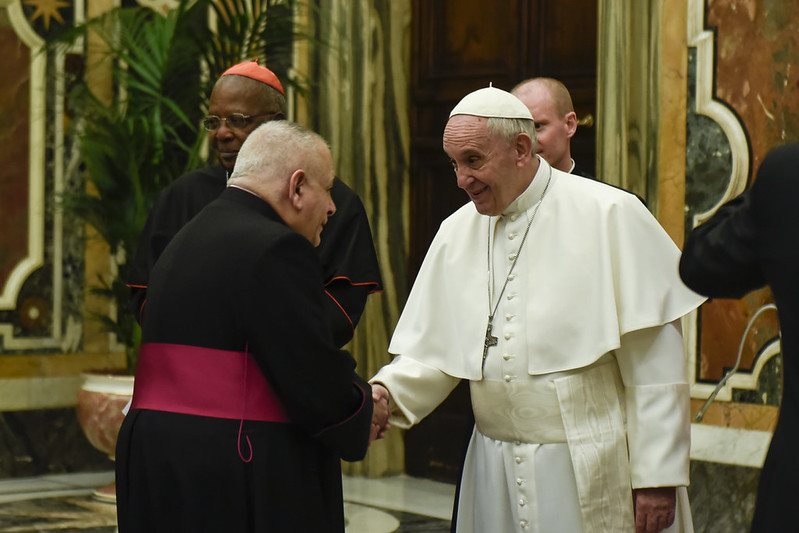
In terms of ICMC, there has always been a special relationship with the Vatican offices since the organization was established. Much later, when Pope Francis renewed the Vatican Curia, ICMC was placed under the new Dicastery for Promoting Integral Human Development, which had taken several Pontifical Councils working on social issues and combined them into a new Dicastery. I can attest to the closeness of the relationship and the support for ICMC’s mission from my time as Secretary General, which spanned the establishment of the new Dicastery and close cooperation thereafter.
ICMC: We’re in something of a turbulent global period for migration, not least in terms of increased levels of conflict and displacement, the rise of the political right, and reduced resources for assistance. Are you optimistic about the future and the role the Church can play?
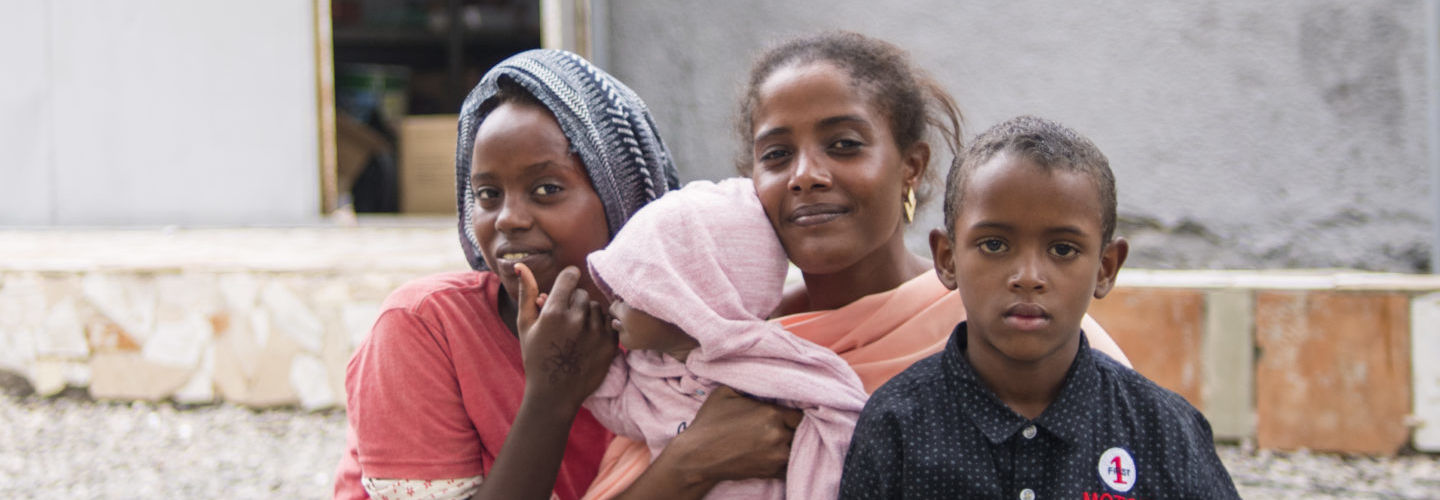
MV: Rather than saying I feel optimistic, I’d say that the virtue of hope is one that we need to maintain, as Catholics between ourselves, and in relation to others. And my experience of working with refugees and migrants is that they are some of the most hopeful people you can find.
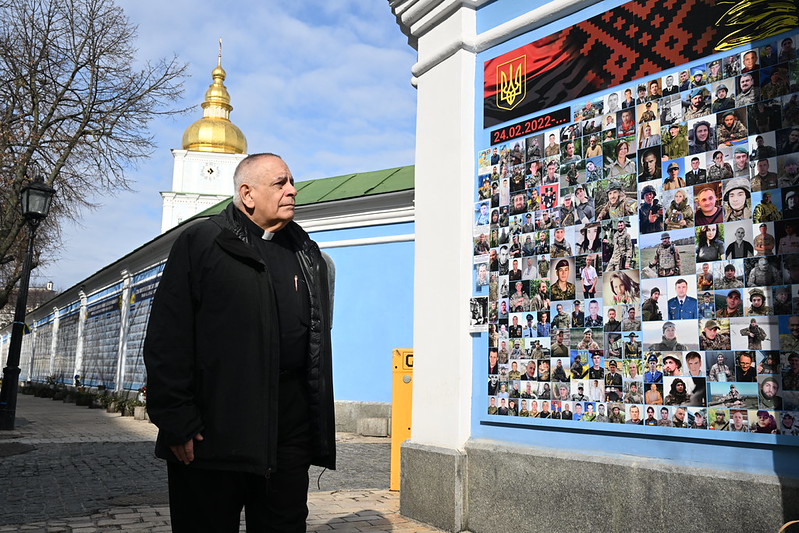
I see it in people in situations of war and conflict: it’s the strongest among them who can maintain hope and who are there to rebuild. That’s certainly what we hear in Ukraine, for example, despite the huge amount of destruction there. I also know it from my own life, in that my grandparents were poor people from Italy with a very limited education who migrated to the U.S. They were filled with hope, and they were able to build something, and in my second generation almost all of us have an education and are professionals. That’s the kind of story that brings us hope.
Many Bishops and others support work with migrants and refugees, but many Catholics do not. We need to bridge that gap and help them understand that this is part of the expression of their faith.
Msgr. Robert J. Vitillo
We often think about what we’re doing for the poor person, but we have to understand that while migrants and refugees may have needs, they also bring with them skills, expertise, values, art, culture that enrich that other place and the hosts. Many people do not think about integration in this way, particularly in higher income countries, so I think it’s crucial to bring that perspective and understanding to believing Christians and Catholics around the world.
In this way, I think our contribution goes back to ICMC’s support for the local churches, which includes support to do advocacy, but also for the question of how we inform people. Many Bishops and others support work with migrants and refugees, but many Catholics do not. We need to bridge that gap and help them understand that this is part of the expression of their faith. When the Mass ends, the priest does not mean for you to just go home and enjoy yourself for the rest of Sunday! He’s instead asking you to bring what you’ve learned from the Sacrament and the Eucharist, directly to the people who have needs. We have to help people put these things together again.
I remain hopeful that we can get through this period, and that people will become less fragmented than they are currently. So, while I don’t know about optimism, I do know about hope! And I have the example of refugees, migrants, the sick, and so many other people in need, who keep their hope despite everything.

Rachel Westerby
Independent writer and researcher on migration and refugees.