Faith in Action: Why the Church Leads When Crises Strike
When emergencies happen, the open doors of the Church ensure it is among the earliest of first responders.
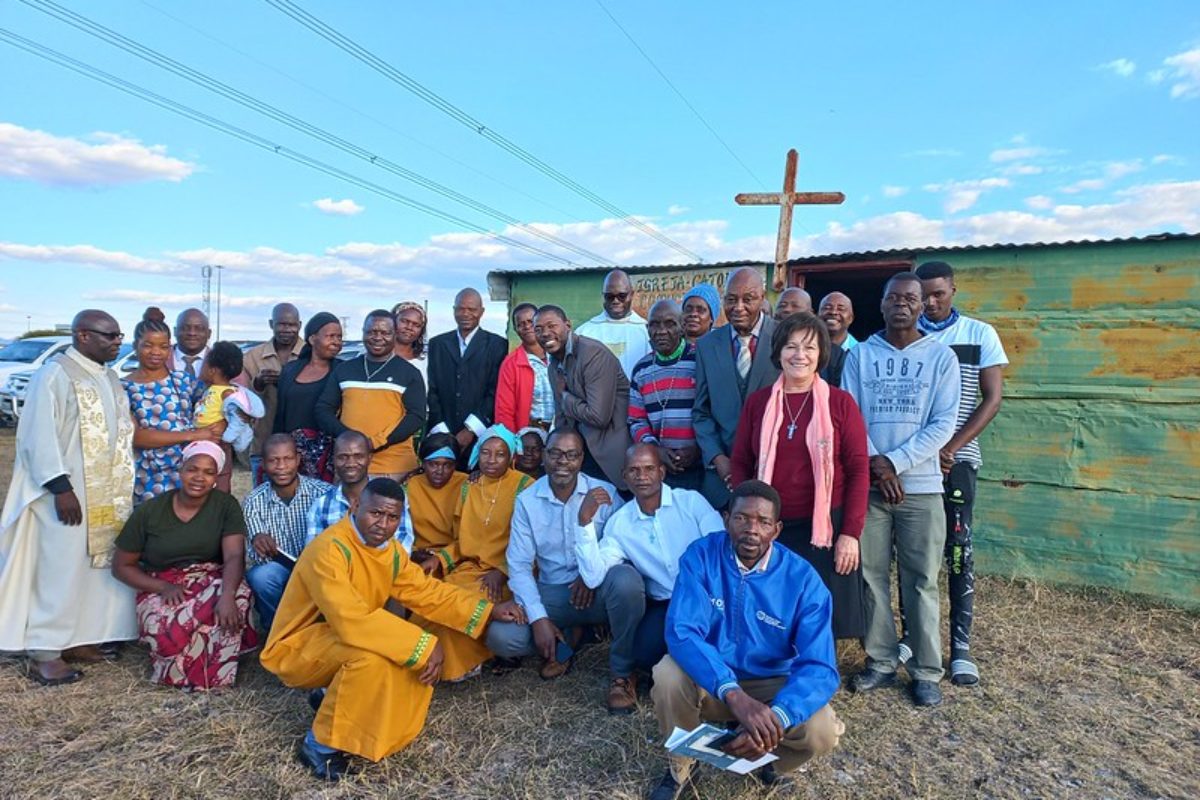
The Church is on the ground, feeding families, sheltering the displaced, and coordinating volunteers, often while official emergency responses are still mobilizing. This unique responsiveness is a direct result of the Church’s orientation toward service and its trusted presence in the communities where help is most needed.
The International Catholic Migration Commission (ICMC) has witnessed this reality for 75 years. As we celebrate this milestone, our experience confirms what many have seen firsthand: faith communities respond to crises with remarkable speed and effectiveness. Here’s why.
Rooted Where It Matters
The Church has a unique advantage in crisis response because it exists in virtually every community. The Church does not parachute in when trouble hits. Church institutions are instead embedded in their communities, with long-standing relationships and local trust.
This local presence translates into concrete advantages:
- Immediate access to at-risk groups through existing congregational relationships, built on trust
- Cultural and language skills that come from helping diverse community members daily
- Physical infrastructure, including buildings, kitchens, and meeting spaces
- Communication networks through worship, community activities, and volunteering
- Knowledge of local needs and vulnerabilities that is often not immediately available to outside organizations
Alongside local communities, churches often play a central role in welcoming newcomers, providing both services and genuine community belonging.
Trust as Currency
In the aftermath of trauma, trust becomes centrally important. Displaced families need to know they can rely on the people extending help. This is where the Church and other religious organizations make a key contribution.
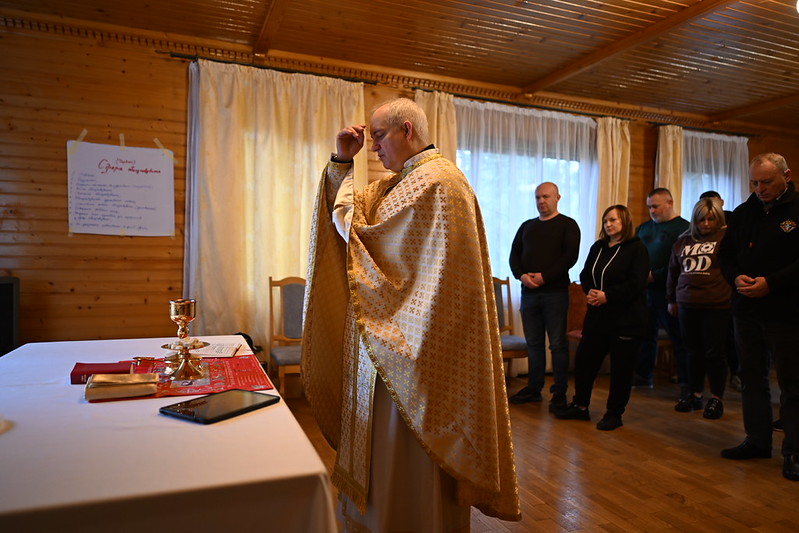
Faith leaders have often spent years or even decades building relationships within their communities. They’ve celebrated weddings, mourned at funerals, and walked alongside people through their daily struggles. When a crisis comes, that relational capital means everything.
For many displaced families, religious practice and accompaniment provide continuity and comfort when everything else has been upended. A familiar prayer, a shared tradition, or simply a spiritual leader who shares their values can bring stability in chaos. The Church offers this spiritual dimension alongside practical assistance.
Infrastructure That Mobilizes
The Church’s response to crises draws on organizational infrastructure that’s already in place. Congregations aren’t starting from scratch when they pivot to disaster relief. They’re leveraging existing resources and adapting systems already designed and used for community care.
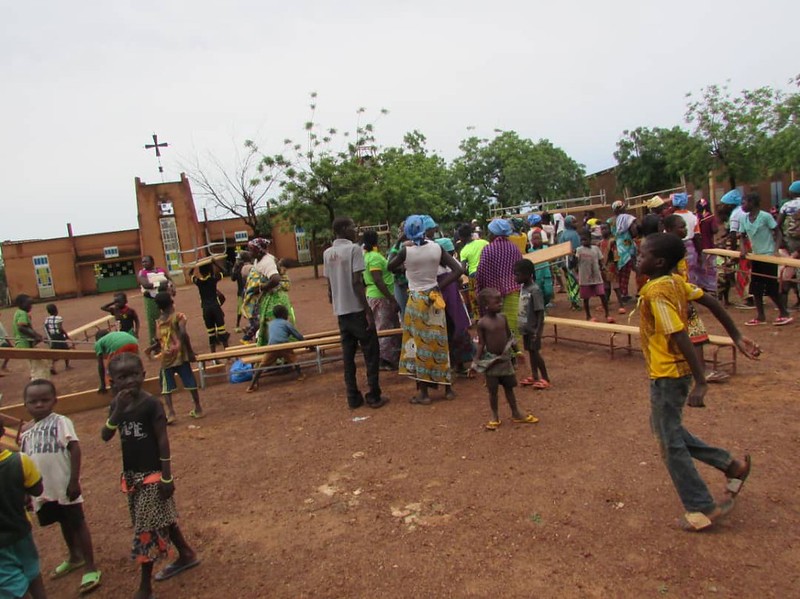
Consider what the Church already has:
- Volunteer networks accustomed to coordinating services and community programs
- Trusted financial systems for collecting and distributing funds
- Physical spaces that can quickly convert to distribution centers or temporary shelter
- Leadership structures to make quick and effective decisions and mobilize grassroots action
- Community communication platforms, from bulletins to social media channels, and of course, word-of-mouth
NGOs working in refugee resettlement frequently partner with churches precisely because this infrastructure exists. Rather than building capacity from scratch, humanitarian work can plug into established systems and scale quickly and sustainably. Church and Catholic-inspired humanitarian organizations have developed this approach throughout history, honing best practices that combine spiritual mission with professional service delivery.
A Moral Voice in the Public Square
In addition to responding to immediate needs, the Church is part of public conversations about our collective and community responsibilities, and global discussions and advocacy on migration, displacement, and disaster response.
This advocacy role takes many forms:
- Church leaders speak at United Nations forums and regional policy summits.
- Interfaith coalitions publish statements countering misinformation about migrants.
- Communities organize to build grassroots support for humane immigration reform.
For communities hoping to make a difference, learning to advocate for refugee rights can begin within faith communities.
The Church’s mixture of direct service and advocacy creates sustainable change. It doesn’t just treat symptoms; it works to address root causes and avoid future crises.
Sustaining the Mission for the Long Haul
Emergency response gets headlines, but community resilience calls for sustained commitment. The Church excels at this long game. It is there before emergencies occur and is still there when news cameras leave, still serving when resources and interest fade, and still walking alongside families months and years into recovery.
This endurance matters enormously. Mental health interventions work best when they’re community-based and sustained over time. Strengthening resilience in populations affected by war requires a sustained presence. Churches provide exactly this kind of steadfast accompaniment and pastoral support, grounded in a mission that both predates and outlasts any single crisis.